Saturday, January 9, 2021

Charles Curtis Turbyfill's story and his descendants


Charles Curtis Turbyfill 

My Great great grandfather Charles Curtis Turbyfill was born to James Pinkey Turbyfill

and Lovinia “Vina” Laws in Ramseytown,  North Carolina. I have not found any records to

pinpoint exactly where his birthplace was. In the 1860 census, C. C. appears as a baby, so

the September 1859 birthdate is definitely the correct birthdate; not the October one. 


A confusing thing on the 1870 census, C. C. is marked as 7 years old, when he should’ve

been marked as 11 years old. However, all the other ages on the 1870 census are also incorrect,

so that census taker was not a very accurate one. 


Over the summer of 1865, C.C.’s family moved to Cranberry, North Carolina- I know this because

his sister was born in Ramseytown in 1865  then his brother Joe was born in Cranberry in 1866. 


The land  CC grew up on is along Buck Mountain Road, close to the Tennessee line, parcel 18,

house on plot 52. CC then bought the land from his father and his father moved the family to

Crabtree, TN (just past Roan Mountain, the land is now part of the park, that information will be

in James Pinkey’s entry) I found a map outlining his parcel, it’s nearly right across the street from

Taylor Chapel. However, I do not know where on this parcel “plot 52” was, the site of Charles Curtis’

childhood home that Pinkey built. Curtis built his home on a different plot of this same parcel, plot 44.

I don’t know where it is. I am trying to reach out to the current owners to inquire about any structures

from 1865-1881 and then the new structures Curtis Charles raised his children in that he built in 1882.

This was under different names in censuses. Cranberry Forge. Cranberry Township. Elk Park.

The same place was also once Mitchell County and is now Avery County. 


When C.C.  was 18, in the year 1878, he married a young widowed mother that was 4 years older

than him. Her name was Rebecca Cordelia Gwyn and moved to Linville Falls Township, NC where

she was already settled near her family.  I also figured out where this land is, but it’s all gone.

It is approximately where the Linn Viaduct visitor center is, between Grandfather mountain and

Grandmother mountain. The Guinn/Gwyn family owned this and they sold it off to a logging company

in 1881. This land was later purchased by the government around 1925 from the logging company. 


Back to the land that CC raised his children on, it was the same parcel that he himself grew up on.

His father sold it to him and Charles Curtis Tubfill bought this land free and clear, no debts.

It is Parcel 181900879967. On the right, between Curtis’s land, Buck Mountain Road, and

Miles Field Road, that parcel is owned by Lurania Oaks. I am still tracing the tree to see if this

Lurania Oaks is a family member to Delilah Oaks. The twins Mary Carrie and Callie, Ethel, Charlie,

and Papaw George were all born on this land.


The land Charles Curtis grew up on, moved his wife back to, and all his children were born on this land . Charles Curtis then died on this same land, but in a different home his son in law Jesse Bare built. 


When C.C. married, he was marked as a 18 year old, pointing to the 1860 census being the correct age.

That record mistakenly listed him as E. Tanullygill and Delia Gwyn.  May 1878, CC gained two step

children he raised as his own, Mary Gwyn and David Henry Gwyn, at the time of the marriage, they

were 3 years old and less than 1 year old. They likely didn’t remember their biological father, but they

knew about their biological dad as they kept in touch with the family growing up as his family was also

their family through their mother. 


Rebecca Cordelia Oaks had married her uncle Samuel P. Gwyn/Guinn on March 10, 1874 and was

widowed 1877, but it’s unclear if he died before or after his daughter was born. She married Charles

Curtis Turbyfill the next spring and they lived on her grandparents’ and her husband/uncle’s family

home for the next 11 years. 


When CC’s wife Rebecca died, he bought land off Elk River Road from Jacob Hicks, the same land

that the Oaks Cemetery is on and buried his wife there. He raised the children until they were all grown

and moved out, then he gave the land to his son in law Jesse Bare, his daughter Ethel’s husband and he lived with them until his death. That land record states Jesse Bare became the landowner on

March 3, 1927. Curtis lived with his daughter Ethel and her husband Jesse Bare for ten more years

until he died in 1937. Jesse built another house on the same parcel in 1921. I am unable to figure out

which home Charles Curtis Turbyfill passed away living in. The plot of this parcel this newest home is

not listed, and I am still looking through the Avery County Deeds for this record.  


The land off Elk River Road with the cemetery now belongs to a Douglas Bare and the descendants

of George Washington Turbyfill and Lillie Turbyfill/Gardner/Pritchard. 


Side fun fact. In August, 1927, his brother William Turbyfill sold his land on what is now

651 Beech Mountain Parkway to the Elk River Falls Fishing Club. That entry is a few rows down from

CC Turbyfill’s entry. The land that business is now on was once a farm. 


 Jesse’s land was sold to some other Bare, and then it was sold again to someone else who pulled

down all the headstones and turned it into a cow pasture. The Oaks Cemetery has been lost to time. 

The reason he gave it to Jesse before he died was to avoid the probate process with wills.

Charles Curtis Turbyfill died on June 4 1937 of heart trouble. His funeral was held at the home of

Lillie Turbfyfill and her husband Lawton Pritchard. Reverend W.H. Stout officiated the memorial and

he was buried in the Oaks Cemetery. 


Children, grandchildren, and great grandchildren.

The children are my first cousins twice removed, the grandchildren are my parent’s generation,

my first cousins once removed/myuncles/aunts, and the grandchildren are second cousins to

all the other grand/great grand children and the great grandchildren are my generation, my 3rd cousins.

I listed a few great great grandchildren for the ones whose parents died young.


If you want to have your names removed and changed to “Private”, shoot me a message and I’ll fix it.

Also, if you spot mistakes, please correct me, I want to ensure my research is accurate. 


  1. David Henry Gwyn / Guinn (not biologically his, but raised as his own.)  1875-1949 married Mary Swift Roberts 

    1. Ora born 9/3/1900 married Alex/Ellick Lyons, died 1938

      1. Dallas Edgar Lyons 1920-1975 married Lillie Janette McKinney

        1. Robert Lyons- died as an infant. Robert and “Till” went on to taking care of many foster children over the years, and Till continued to care for foster children until she was 65 (1998) and she died in 2004. 

      2. Edward Henry Lyons 1923-1995

        1. Terry Lee Lyons

    2. Jana Guinn/Gwyn born 1902 

    3. Zora Gwyn 1904-1938 married Horace Shull

      1. Sherry Yvonne Shull (Doran)

      2. Steve Shull

      3. Patsy Shull (Jones)

      4. Sandra Shull (Smith)

      5. Shauna Shull (Booher)

    4. Stella Guinn (Gwinn) 1907-1927 died of pellagra.  (This is a vitamin D deficiency), no children

    5. Etta “Holly” Gwinn 1908-1979 married John Cornelius Byrd

      1. Betty Jo Byrd 1925-2007 (married Ralph Chambers) 

      2. Donald Byrd born 1930, married Dorothy Odom

      3. Roxanne Byrd born 1932, married Thurman Simerly

      4. Ivan Byrd 1934

      5. Colleen Byrd (Bowling) about 1937 

      6. Gloria Byrd (about 1941) 

      7. Arnold Eugene Byrd 1948-2020

    6. Andy Guinn 1911-1929 (accidentally shot himself) leaving behind a widow at 18 years old. Unknown if wife Maud Links Guinn had a child by Andy. 

    7. Edward Edgar George Guinn 1918-1993 married Mary Roberts Swift

      1. Edward Charles Wayne Guinn 1947-2017 m. Shelby Jean Arquette

        1. Melinda Guinn 1969-1989 married Dusty Constable  (Melinda died of an avoidable injury, family filed a wrongful death lawsuit against the hospital) 

          1. Travis Bruce Constable 

          2. Amanda Renee Constable

        2. Charles “Goo” Guinn 

        3. Robbie Guinn

        4. Michelle Guinn Simpson

        5. Delia Guinn Moon

        6. Paula Guinn Smith

      2. Judy Ann Guinn 1949-2003 married David Arquette (recovered from train wreck) 

        1. David Arquette Jr 1970-1989 Accidentally shot himself 

      3. Larry Dean Guinn 1949-2013(recovered from train wreck)

        1. Larry Dean Guinn

        2. Heather Renee Guinn

        3. Lindsey Kay Guinn

        4. Melissa Gayle Guinn 

      4. Teresa Guinn 1952-1966 Train-car wreck 

      5. RosaLee Guinn 1954-1966 Train-car wreck 

      6. Pasty Ann Guinn 1956-1966 Train-car wreck 

    8. Alice Guinn married William Puckett 

      1. William Puckett Jr.  Banner Elk 

      2. Robert Max Puckett - Banner Elk 

      3. Maxine Puckett 1924-(likely step daughter) 

      4. Leah Puckett 1926-1958 (likely step daughter) 

      5. Josie geneva Puckett 1928-2014 (Probably step daughter, obit says daughter of Rose) 

  2. Mary Guinn / Mary Gwyn 1877-1915 married Jacob Hicks  

    1. Mary Hicks 1897-1915 (both Marys died of lung infections/ pneumonia) and Jake Hicks as far as I can tell never remarried. This line ends here. 

  3. Minnie Turbyfill 1881-1965 married Edward Marlow  No children that I know of… this line ends here. Ed and Minnie had a pool hall next to the Tweetsie Railroad. 

  4. Lillie Turbyfill 1883- ?    Married George Gardner, widowed 1912, married Lawton Pritchard, divorced Lawton. She lived 2 houses down from her baby brother George Washington Turbyfill on Elk River Road. I haven’t found her correct death information, as the Lillie Turbyfill death in 1952 is the wrong person, she’s the wife of Rob Turbyfill, not the same person as Lillie, daughter of Curtis Charles Turbyfill. If you know any information about her death, please let me know. 

    1. Olive Daisy Gardner 1902-1982 married 2 times , then went by Olive Turbyfill until death. First husband Jesse Sayler died of a burst appendix, divorced second husband French Digman. I have not found information on when she took her mother’s maiden name. If you know more about why Olive went by Olive Turbyfill, let me know please. She had three sons- 

      1. Richard Harold Sayler 1926-1980

        1. Linda Sayler married Lonzo Denver Herron

          1. Lonzo Herron Jr 

        2. Richard Harold Salyer Jr. married Velma Ruth Conley, and had a special best friend Doug for 43 years. 

          1. Melaine Sayler Yohem (young widow) 

          2. Melissa Sayler McClintick

          3. Megan Sayler 

        3. Steven Sayler

        4. Elaine Louise Sayler married Dave McCauslin

          1. Jeanine McCauslin

        5. Anita Sayler (Wilson) 

    2. Clarence Gardner 1904-1980(He lived in the house between his uncle George W Turbyfill and his mother Lillie Pritchard on Elk River Road) 

      1. Barbara Lucille Gardner 1938-2020, married Ronald West 

        1. Brian West 

        2. Tonya West (Ledford)

      2. Maggie Deloris Gardner married Ronald Stephenson 

      3. Naomi Kate Gardner married Woody Owenby

      4. Lewis C. Gardner

    3. Cecil Audrey Gardner 1915-1918 (Died during the pandemic in 1918 to the flu strain that was going around, more specifically, his lungs got infected and shut down at 3 years old.) 

  5. Mary Carrie Turbyfill 1888- (also has an older half sister Mary Guinn/Gwyn) She was also Mary Guinn or Mary Gwyn, never Mary Turbyfill. You can also look at the censuses to see that they’re indeed two different people. I believe she died between 1910 and 1920 and is NOT the same person as Mary Guinn as she has her own birth recorded in the Avery County book. In the birth records, her name is mis-transcribed as “Turbghill”and the father is put down as E. Turbghill, but when you look closely, you can see it’s actually supposed to be C.C. Turbyfill. Mary Carrie and Rosa Callie are twin sisters.  The next line, Rosa Callie is transcribed correctly and you can clearly see it’s the same father, CC Turbghill. 

  6. Rosa Callie Turbyfill 1888-1965, married Charlie Smith 

    1. Carrie Cordelia Smith married Rush Baliff 

      1. Charles Dixon Baliff married Mary Belle Johnson 

        1. Robert Floyd Bailiff (died right around the time his son was born) 

          1. Rush Floyd Bailiff 

        2. Edna Charlene Bailiff married Harold Ward

          1. Brent Ward 

          2. Kristie Ward 

          3. Amanda Ward Messer

      2. Margaret Bereniece Baliff married Paul Winters 

        1. Christopher Joseph Winters 

        2. Shanita Winters Robinson

      3. Steward Bailiff (lives in Mableton, GA)

      4. Jo Ann Bailiff married William Clarence Ruff

    2. Flora Edith Smith was a nurse, she married *one* man that went by both Fillmore Shoemaker and Phil Hicks

      1. Roger Phil Hicks/Shoemaker 

      2. Charles Louis Hicks/Shoemaker

      3. Jimmie Shoemaker/Hicks

      4. Jack Alvin Shoemaker/Hicks

      5. Kenneth James Shoemaker/Hicks

      6. Vivian Reed

      7. Joyce Kay Shoemaker

      8. Phyllis Ollis

      9. Pat Odell Shoemaker

    3. Katie Alma Smith, died as an infant 

    4. Madge Leona Smith married William Peake

      1. Diana Olsen 

    5. Ruby Roeanna Smith married Adrian Julian 

      1. Terry Lynn Julian married Rebecca Sides

      2. Glenda Rose Julian married Ray Rensi 

      3. Frederick Wayne Julian

      4. Adrian Julian Jr. 

      5. Frieda Jayne Julian married Samuel Foster

    6. Rosie Etta Smith, died as a 6 year old.

    7. Ila Edna Smith (a twin) married Jonah Potter

      1. Billy Joe Potter married Susan Davies 

      2. Beulah Juanita Potter married Jay Laney Roberts

    8. Edna Ila Smith (a twin) married Dana Harmon Young 

      1. Dana Dean Young 

      2. Jo Nell Young  

    9. Clara Sue Smith (never married, no children)


  1. Ethel Turbyfill married Jesse Bare and Ethel is the daughter Charles Curtis left his estate to, and Jesse Bare passed down the land down to his children, including the land the Oaks Cemetery was on. Sometimes their last name was written down as Bear. Fun fact- Her brother George married Jesse’s sister Mary Magdalena Bare, so the children of Ethel and the children of George Washington are double cousins. Our DNAs would show us as closer relatives due to this, for example, with DNA testing,  their child would show up as my uncle instead of my first cousin twice removed. If you also did the DNA test and saw that same connection being closer than it should be, that’s why.  In old age, Charles Curtis stayed home, but they appear on the census as Jesse Bare being the owner, and CC listed as “father in law”. He had two tracts- one off Elk River Road and one along the Buck Mountain Road near Taylor Chapel. 

    1. Robert Harold Bare married Wilma Snook, his military records on Fold3, NAR, and Ancestry are INCORRECT. His son stated that he was in South Africa, never an army air corps man. NAR is closed to physical file requests due to the COVID-19 pandemic, so it’ll be awhile before I can sort out the correct story. Robert does have 3 other cousins also named Robert Bare, also born in Avery County, I suspect that is why their records are all tangled up. 

      1. Donald Harold Bare

      2. Gerald David Bare

      3. Marleen Bare

      4. Robert “Bobby” Bare

      5. Colleen Bare

      6. Rick Bare

      7. Steve Bare

    2. Wayne Curtis Bare married Ruby Lee Murphy, no children. 

    3. Charles Stuart Bare married Alicetean Richardson Norris

      1. Mary Ann Bare(married Francis Bandy then Wayne Oler) 

      2. Randy Bare

      3. Charles Bare

      4. Billy Bare

      5. Donnie Bare

      6. Gail Bare

    4. Jesse Bare (died at 3 months old) I believe the family moved to Ohio after Jesse’s death. 

    5. Winston Edward Bare married Helen Rose Black, he served on USS Ashtabula, then after the war, worked as a furnace maintainer at a steel mill in Ohio 

      1. Jerry Lee Bare married Carole Haller (There is another Jerry Lee Bare, son of Freelin Bare, his 4th cousin 3 ways, up the Sheets line and the Bare line two ways, this is NOT the same person as this Jerry Bare) This Jerry Lee Bare lived in Ohio his whole life. 

        1. Kristen Klintschenko

      2. William Leslie Bare, passed away at 21 years old. No wife/children known of. 

    6. Evelyn Pauline Bare married a Fair and a Treece. Evelyn was born in Elk Park, so at this time the family moved back to North Carolina and some of her brothers moved back to Ohio when they were of age. When she was 21, spent a month in New York City, then a year in France. She took the ship MV Georgic (same type of ship as the Titanic) to Port Le Havre, France and from there she went around France by train. I wonder what kind of adventures Evelyn had while abroad.  

      1. Patricia Ann Fair 

      2. Jack Allen Fair married Kathleen Lederman

        1. Breanna Fair

        2. Mandy Fair

    7. Shirley Jean Bare (No information on her children.) 

  2. Charlie Turbyfill, died young I believe as he doesn’t appear in subsequent censuses with his parents. 

  3. George Washington Turbyfill married Mary Magdalena Bare

    1. Georgia Turbyfill (died as a little girl) 

    2. Frankie Carrie Turbyfill married Junior Hicks

      1. Rayna Thompson

        1. Neal Anthony “Ty” Thompson, my second cousin, rest in peace. 

        2. Tim Thompson 

      2. Dale Junior Hick, one daughter Jeneen

      3. Carlos Leonard Hicks

      4. Dreama Darlene Hicks 

    3. Juanita Marcella Turbyfill married John Trivett

      1. Charles Gene Trivett was the coroner of Avery and Carter Counties. 

      2. Vivian Lee Trivett 

        1. Brian Pyle

        2. Tammie Pyle Thelen

      3. John Timothy Trivett married Paula Zaglaniczny

        1. Stacie Trivett Ropes

        2. Timothy Trivett 

      4. William Rolette Trivett 

    4. George Washington Turbyfill Jr (Died as an infant.) 

    5. Lloyd Worth Turbyfill married Ramona Bell Wilhelm 

      1. Marcella Jo Turbyfill 

        1. Cary Armstrong

        2. Sean Armstrong 

      2. Starly George Turbyfill 

        1. David Turbyfill 

        2. Dylan Turbyfill

        3. Eric Turbyfill 

      3. Gary Kent Turbyfill married Mary Elizabeth Witt

        1. Amie Shields-Lee-Baxter 

        2. Gary Kent Turbyfill 

      4. Michael Turbyfill, no children 

      5. Tammy Turbyfill married Michael Conner

        1. Tishia Turbyfill-Conner-Bonneau-Chambers 

      6. Loyd Harold Turbyfill 

        1. Roman Andrew Turbyfill

        2. Austin Drake Turbyfill/Burdine 

    6. Ruth Turbyfill  married Ralph Winters

      1. Austin Winters 

      2. Pamela Winters married Micky Dial 

    7. Nicola Turbyfill married Harold Pritchard 

      1. Danny Pritchard 

      2. Steven Pritchard 

      3. Vera Angela Pritchard married Woo Buck and Lou Mayo

    8. Elmer Curtis Turbyfill married Shirley

      1. Elizabeth Turbyfill married Doran Gwyn

      2. Tammy Turbyfill Hartz

      3. Curtis Turbyfill

    9. Maynard Turbyfill married Georgia Worden 

      1. Twins Tonya Turbyfill

      2. Twins Sonya Turbyfill (Rich)

      3. Maynard Keith 

      4. Theresa Williams 

    10. Roma Geraldine Turbyfill, died as an infant

Thursday, December 31, 2020

Robert Harold Bare, Prisoner of War Horror Story


The squadron. Most of the 169 men that were POWs are pictured here. 
I don't know which one is Robert. 

Robert is in the back row, second from left with his crew. 


 Robert Harold Bare was born to my great granduncle Jesse William Bare, brother of my grandmother Lena Bare and Ethel Turbyfill, sister of my grandfather George Washington Turbyfill. Robert Harold Bare and his siblings are genetically full siblings to the children of George and Lena due to being double cousins. 


Robert also has two cousins named Robert E. Bare that’s 5 years older than him, the son of Arthur Bare and another cousin Robert B Bare son of Ed Bare. In 1930 he lived with his parents Jessie and Ethel Bare, plus his grandfather Curtis Turbyfill and his brothers Wayne, Charles, and Winston. He grew up on Elk River Road. 


Robert Harold Bare, service number 34233825  joined the air force and he was moved to Will Rogers Field in Oklahoma in July 1942 to prepare for departure overseas. In September, the crew flew to Grenier Field in New Hampshire. They were assigned to the Royal Air Force as American loaners. Robert and his crew flew to RAF Shipdham in October 1942. 


Robert was in a B-24 Liberator and you can read more about the airplane here

http://freepages.rootsweb.com/~webermd1/family/Liberator-Info.html


In November 1942, Robert and his crew entered active duty bombing targets in France, Belgium, Germany, and Poland with the 514th Bombardment.   In 1943, Robert and many others flew to Sicily to bomb the island in preparation for the incoming invasion, the same invasion Junior Hicks was a part of.  Robert was then sent to bomb the beaches in Normandy for the incoming invasion. , then they went to do low level raids on the oil fields.  (Fun fact- Junior Hicks and Robert Bare enlisted the same day at the same place.)


From February 1944 to August 1944, Robert was stationed in England and flew to various targets for low level bombings. Things like airfields, train tracks, suspected u-boat locations, bridges, oilfields, etc. This time frame is still classified, so I don’t have access to the details of specific targets on specific days.  The confusing thing is their graves say they were Army and after some investigation, I discovered that the Air Force wasn’t a thing, they had the Army Air Corps. Thus they were buried being labeled as army. 


Sergeant Robert Bare was the pilot,  his copilot was Lt. John Johnson and the men manning the guns were 2nd Lt. Anthony Homyk  and Raymond Jones , the gunners sat in the nose below the pilots  the radioman/radar man Sgt Louis Elgert sat behind the pilots, and above the radar man sat the flight engineer Richard Hess, he manned the top turret, one man was curled up in a ball in the ball turret on the bottom, Sgt Raymond Nickerson,  two men, Sgt Gerald Nygard, Sgt Orlando Neely,  were in the tail manning the rear guns and finally, one man, Samuel Dudley was in the middle making sure the bombs were loading correctly  


Robert didn’t let his crewmates step forward alone when the Germans asked the Jews to step forward. Robert isn’t a jew, but he showed bravery and solidarity by stepping forward too. It was also his duty as a pilot, being responsible for his crew.  His group of 169 airmen were captured. They crashed in occupied France and they were disguised as civilians. For this reason, the Germans thought they were French spies. They crashed in August 1944. He was listed as missing air crew, along with John Johnson, Anthony Homyk, Raymond Jones, Louis Elgert, Richard Hess, Raymond Nickerson, Gerald Nygard, Orlando Neely, Samuel Dudley, Harold Romanoff, Seymour Yudkowitz, Benjamin Fountain, Benjamin Moore, Daniel Miracco, Robert Moody, Stanley Humienny, and Arthur Melius. Andrew Kingsley was killed in the crash, but he was also listed as missing in action until they found the other men.  The other men listed not in the above crew was from another B-24. The specifications of this crash is still not declassified. It only lists who was listed as Missing in Action due to missing planes. 


There was a few items that were declassified and here;s what I discovered. If you are sensitive, I would stop reading at this point. 


Robert and his crew were forced to stand still in a line for 14 hours as the Gemans tried to determine if the others were Jews or spies. From April to August, they were held in the Gestapo  prison at the Gestapo headquarters in France. When they couldn’t break these men into admitting they’re actually spies, the fact they spoke English, not French didn’t matter. French can speak English too and they assumed they were refusing to speak French. So they were sent to a concentration camp.  When they were brought to Stalag Luft on August 20, 1944. The 169 airmen were from the United States, United Kingdom, Canada, Australia, New Zealand, and Jamaica.  There are two movies based on this, but the movies added to what really happened, so they aren’t historically accurate. One movie is called the Wooden Horse and the other movie is called The Great Escape, made in 1963 featuring Steven McQueen and Charles Bronson. 


October 1944, the Nazis split up the airmen and only one American pilot was left in Stalag Luft and the rest of the American airmen were brought to Buchenwald. There, the men were forced to undress and be fully washed and fully shaved head to toe, in full view of everyone.

They were freed on April 2, 1945 by the same unit my other granduncle was in, Junior Hicks. However, at this time, Junior was overseeing the supply chain. Junior coordinated the supply chain getting food to the surviving prisoners and figuring out how to bring the prisoners out and on to their respective homes. Junior was the kind of man to be good at logistics. I wonder if Junior and Robert knew they were related by marriage, his wife Frankie being Robert’s double cousin- his parents and Frankie’s parents married each other’s sibling. Robert and Frankie were genetically full siblings due to this. It’s not likely they physically saw each other, as Junior was in charge of overseeing the supply chain. They would’ve recognized each other, having enlisted the same time. 


Buchenwald had 21,000 inmates, but only 4,000 were actually Jewish. When they heard the 6th bombing and coming closer and closer, the inmates were frightened because they had heard of Auschwitz where they did a mass killing to cover up their war crimes. The Germans tried to move them all, but due to the sheer number of 21,000 people, many were marched into the forests and told to run as they shot them in the back. Only a few that were marched into the forest escaped with their lives. 2,700 people were killed in the forests and the Germans did not have time to move the rest by the time the Americans broke through to the camp on April 2nd.


Robert was one of the prisoners the Germans experimented on. They had purposefully injected him and his crewmates with typhoid so when the Americans showed up, they were too weak to be lucid enough to realize the Germans were gone. They also tested acids on Robert. The men from the B-24 squadron were fearful.  Robert was also raped repeatedly, along with many others.  He was treated by an Army medic Anthony Acevedo, and that man kept a diary of his experiences. Anthony Acevedo was also raped. Yet that man still treated Robert and many other’s wounds.  Robert Bare appears as Robert Bahr in his diary.  The Army had all the survivors sign something swearing to not tell anyone about their experiences and those records weren’t declassified until 1985 and even then, the NAR quietly declassified the experiences of the POWs, so it was a few more years before the general public was aware our own American soldiers were in the same concentration camps as the Jewish. 


Back to Robert… the prisoners did not realize the Americans were in charge now, 9,280 inmates hid until the Americans found them on April 9th. Between April 2nd and April 8th, they already transported 4,880 people out to safety in tanks. 


Some hid in the latrines, some hid below the buildings, some hid under random planks of wood carefully arranged to disguise there was space underneath, and his buddy Melbourne was on the top bunk, stacked 3 high. Melbourne made a hole big enough in the roof to slip through, and a few hundred inmates followed him up to the roof, including Robert Bare. As the Americans in troop 6th searched for survivors, the inmates didn’t trust what they heard and they stayed hidden.  The bunks weren’t even really beds. They were shelves. No blankets, no mattresses. Each shelf was 12x12, and they forced each shelf to have 16 people on it, the clearance between each shelf being 18 inches. 


Their rations were as follows: Sundays, soy beans (the only protein for the whole week); Mondays, jam and black bread; Tuesdays one potato, Wednesdays, beet root liquid/soup (just beets boiled down in water); Thursdays Jam and black bread, Fridays, one potato, and Saturday, the beet root liquid concoction , so they all lost weight. Robert went in weighing 165 pounds, but when he was found, he weighed 97 pounds. That was still heavier than other soldiers. They were also forced to stay in the shelves at night, even if they had diarrhea due to the typhoid fever purposely given to them. If any of the 16 people on a particular shelf dared complain, the Germans would line up the 16 people from that bunk and shoot them in front of the other prisoners, so Robert and his 15 bunkmates kept their mouths shut. 


The Americans left, thinking they had gotten all the survivors out. The germans returned and found the few hundred up on the roof and they captured them and forced them on a march to another camp called Flossenburg.. 


When the POWs stumbled, the Germans would be cruel to them all. Robert fell and a German soldier stomped on him hard enough to cause his uthera to burst all the way down to his prostate.  Robert and his men were forced to march for a month. They were not allowed to lay down or they’d get stomped on again.


 On June 2nd, Allied Forces from Australia found these men and rescued them by shooting the Nazis that were holding them captive. They took the shackles off and brought them to a hospital in France. There, Robert was treated. His medical records are declassified. Robert had a scalp wound with no nerves involved, sutured shut.This wound was from the butt of a rifle. Robert had anal laceteratons that needed to be treated. Robert had a wound through his shoulder from acids being poured on him which ate through his shoulder front to back. It was gaping open.  Robert’s friction burns were treated from being dragged across the gravel. Robert’s urethra was reconnected to his prostate and repaired surgically. Robert also had a severe case of lice. His bunkmates had a kidney removed so they could experiment to see how the human can survive with one kidney. They were not under anesthesia when that happened to them. All the injuries were classified as “Injury Type 2: intentionally inflicted by Military Enemy in close quarters.” This is probably why his medical file was declassified, to use as evidence in the trial against the Germans that had tortured the American soldiers. 

https://en.wikipedia.org/wiki/Buchenwald_Trial 


When Robert was rescued, he had to be carefully fed. The Americans gave him thin barley soup with beef broth. Many more American soldiers died from being given too much food at first. With Robert, he was slowly given more and more. The first week, a cup of mostly beef broth with barley in it twice daily, told to go slow. A lot of people couldn’t resist the temptation to slurp it all down right away. The next week, it was half barley to the amount of beef broth twice daily. The 3rd week, they went up to 3 times daily feeding, two the barley soup and one small beef.  At week 6, they were given eggs at breakfast with toast and on to resuming full feedings.  For this reason, he was not part of the first groups to be transported back home. Plus he needed to recover from typhoid fever before being put on a ship or airplane. 


Robert was discharged from the hospital on July 29,1944 and he went back home to his parents Jesse Bare and Ethel Turbyfill.   Robert was formally honorably discharged on October 12, 1944. 


Somehow, Robert wasn’t finished with serving. Robert re-enlisted on November 11, 1945, stayed stateside as part of the reserves, and was honorably discharged from the reserves on  May 4, 1947. 


Robert married Wilma Shook by a baptist minister named Glenn Gentry  on February 6, 1946 and their first son came in November 1946, Donald Harold Bare then Robert “Bobby” Bare, Colleen Marie Bare, Gerald David Bare, Marleen Bare, Rick Bare, and Steve Bare.  These children are a miracle given the severe injuries he got during his time of being a POW. 


Robert lived at 365 Grandfather Road, Banner Elk, NC with his wife and children for over 25 years. He was buried in Jestes Cemetery after his death on March 30, 1995. I wonder if he told anyone about his POW experiences, after 1985 when he was allowed to. I have trouble wrapping my head around this.

I am aware of the concentration camps, but they were always in my mind a Jewish thing. For some reason, having a family member, a double nephew to Papaw George and Lena Bare made it more personal to me and it leaves me feeling more ill and horrified. It’s no longer a part of history I am detached from because I thought it didn’t affect anyone in my family. How wrong I was. I’m sick and angry about what he went through. 


This was difficult for me to write and difficult for you to read. But this is a part of our family history. We can’t forget history, we owe them that.


Example of what they forced the airmen to do- strip down, dunked in lye, then fully shaved head to toe in full view of everyone else. 

The latrine that some of the men hid in. They burrowed down into the waste to hide. 
The "bunk beds", 16 men to each 12x12 shelf. Robert and his crew were in the middle shelf of bunk 26. 


See the different clothes the Jews were wearing. They wore stripes with a yellow star, but the POWs were in solid clothes. 
More fellow POWs in Buchenwald

Notice how the only Jew POW had to wear the stripes, whereas the rest of them were either naked or in solid clothes. 
Some of the POWs reacting to realizing they were rescued. Most of them were too injured or sick to get up and cheer. 

Bunk 24, very close to where Robert was. 

The president of the US touring the horrors of what the Germans made his American men endure. 


Tuesday, December 29, 2020

My Granduncle Junior Hicks


The officer home that Junior Hicks and wife Frank and toddler daughter Rayna lived in for a few months. 


The map that the 6th followed, however, Junior was placed in various places due to his usefulness. 

The signia to signify that he's 5th rank 

 Junior Hicks is my granduncle. He had an amazing life full of history. He was born August 17,1921 in Elk Park, North Carolina. When he was 14, he began driving cars and became indispensable to the Elk Park community by driving school buses and trucks for various stores. 


  At 20 years old, Junior enlisted into the Army, on September 3rd, 1941 where he was immediately sent to Fort Chickmunga and his knowledge of mechanics and driving skills had him quickly promoted to a driver for the major at the fort within a few months, level 2. A month later, he was a level 3 warranty officer and moved to the Officer homes and no longer in the barracks. 6 months later, he was a level 4 technician warranty officer, responsible for getting everyone out of the barracks each morning and teaching others how to keep the army vehicles running smoothly.


In April, Junior got R&R and coincidentally, this is when he married Frankie Carrie Turbyfill, April 18, 1942. I wonder if Junior wrote letters to my aunt Frankie while he was overseas. Oh to be able to get a peek at those letters if they exist.


Junior’s serial number was 14063575 and with this I was able to find what he did during the war. Operation Torch, January 1943-May 1943, Morocco was invaded by the Axis powers. Junior, along with many others in his unit were loaned to General Patton. Casablaca had already been freed of Axis powers by the time Junior arrived. Junior was put to work instructing and overseeing infantry in tuning up all the vehicles. The sands were harsh on the vehicles and prone to needing frequent maintenance. They then all headed to Tunisia so they could push back the Axis powers, but an attack at Djedeida pushed them back . They retreated to Tripoli to regroup.  On February 14, 1943, they were further pushed back through the Kasserine Pass. This setback forced General Patton to command his men to wear American uniforms to disguise the fact they were British,  and they tried again to free Tunisia of Axis control and failed again. 


They called for ships to come pick them up in Casablanca and during those two months, Junior took in the sights of Casablanca and commanded the mechanics keeping the amphibian car/boats running and ready for the upcoming campaign. The ships arrived in June and Junior was responsible for loading all the vehicles onto the ships in the best order. He had a knack for making sure things fit and would be quickly deployed. Tanks, amphibian vehicles, jeeps, trucks, etc. All kinds of vehicles fell under Junior’s responsibility. While in battle, he drove one of the tanks and called out commands over the radios. He reported to Sir Harold Alexander, who reported to George Patton. 


In June, the platoon took the ships around the coast to attempt to free Tunisia again and this time they succeeded. 10,000 Germans and 20,000 Italians surrendered and abandoned their tanks, jeeps, etc. Junior would go over to each vehicle and get it ready to be claimed and he organized, instructed, and got all them back onto the ship to take back to England. 


Junior stayed in Tunisia to prepare for the next operation. On july 9th, their troops headed to Sicily as part of Operation Husky. They drove out Benito Mussolini and freed Silicy from Axis control. This time, Junior was in a Sherman tank but commanded the other amphibian vehicles as they all left the ship to land on Silician shores. Junior reported to Harold Alexander still.  The next day, Junior pushed Axis powers away from the lighthouse so that the Special Air Service could capture the lighthouse. Once they successfully captured the lighthouse, from the high perch, the snipers from that division helped the 6th free Sicily. 


From July 12 to October 5, 1943, Junior earned leave and he went back home. Let’s say their first daughter was born May 8, 1944. Wink wink. Junior and Frankie must have been ecstatic to see each other, as Frankie barely saw him during the first year they were married. 


From October 1943 to June 1944, Junior was in Sicily helping the Sicilians get situated and reclaiming their land, clearing the rubble, and such. In June 1944, Junior was called to help capture Rome due to the troops in Italy being unable to get up to Rome due to the land being of excellent defense positions for the Axis powers. They needed to do another surprise landing. The ships arrived in Sicily to pick up Junior and his troop, as they needed someone to drive the tanks. On June 4, 1944 in the dark, they broke through Monte Cassino and on to Rome. This was called Operation Buffalo. Then the tanks were commanded to push the Italians up north to Pisa. This is the same day D-Day at Normandy was happening.  And also possibly during this time, he got a letter he had a baby girl born. 


In July, Junior was sent to Omaha Beach to help with the logistics and planning of where supplies go, as the person originally responsible for this was killed in action during D-Day. Junior spent a month being responsible for the logistics of supplies until he could be replaced, then he was sent to Saint Tropez for another surprise landing. This was called Operation Dragoon. Junior drove a tank from Saint Tropez to Touloun, liberating the French along the way. 


From Touloun, Junior commanded a fleet of tanks, leading a convoy to Paris, the headquarters. Once he arrived in Paris, he stayed there for 6 months, from August 1944 to January 1945. During his time in Paris, he oversaw the maintenance of all the vehicles. Being the headquarters of the Allied Powers, nearly all the vehicles were in Paris at some point and Junior was responsible for ensuring all were ready to go. 


In January 1945, Junior was called to the famous Battle of Bugle, there is a lot of footage of this battle, however, Junior was driving a tank, so his face wouldn’t be in there unless he stuck his head out for a photo. In December, some Allied troops were trapped somehow and they had a huge supply problem. Junior was good at solving the logistical issues, and he realized a tank could be the solution, because they’re not as vulnerable as trucks. Junior laid out the logistics where a truck from Paris would meet them at a safe point halfway between the Battle of Bugle and they’d load the supplies into the tank, making it really cramped. Junior used the tank to protect himself and his men as they drove back and forth bringing supplies, as the limited space meant more trips. His division was in Schmidt, Belgium and I believe the halfway point was Brussels, Belgium. . 


Junior was so useful in this role, he was put in charge of logistics of getting the tanks to where they are wanted, laden with supplies. He was able to maximize the space within with creative arranging. He was made a supply chain management and promoted to Level 5, the highest rank within the technical command. During most of 1945,  Junior helped coordinate the supply chain. On August 6, 1945, he was sent to Port Cherbourg, France to serve under General Sommervell.

Thus, when Hiroshima was bombed, Junior was in Port Cherbourg. 


From August 6, 1945 to December 1945, Junior was responsible for getting all the POWs out of Europe and onto the United States. His talent for logistics meant he would look at the space each ship had and placed the correct number to not underload or overcrowd them and he would make sure the ones that were wounded would have space to be laid down and attended to by nurses. He would instruct people in how and where to set up bunks on the ships that were meant to be cargo ships, therefore, no lodging.  He would also load supplies headed back to the US on the ship. He also helped drive the tanks onto the ships to be taken out of Europe now that the war was over. He stayed in France until every last American POWs were out of Europe and he embarked the last ship to leave on January 8, 1946. He disembarked in Hoboken, New Jersey and took a train to Fort Oglethorpe and lived in the Officers house in Park Chickamauga. 


Junior was awarded the American Theater Service Medal, the EAME service medal, the Bronze Star, the Good Conduct Medal, and the World War II Victory Medal. On January 12, 1946, he was joined by his wife and his 20 month old daughter and they lived in the Officer housing. I wonder how he felt seeing his daughter for the first time. Was he ecstatic or kind of sad he missed out on the baby phase. I wish I could ask Frankie and Junior, but they’ve gone on to Jesus’ arms. 


He mustered out on February 8, 1946 then the Hicks family moved back home to Elk Park, North Carolina. By May 1946, Junior had a job driving the school bus. Frankie and Junior quickly had two more children, two boys in 1947 and 1949. Ten years later, they welcomed their final child, a girl in 1949. 


In 1959, something happened and he was no longer able to drive the school bus, so he moved to Detroit to find work. AHe was back home on February 6, 1960 when he started working for the local rescue organization. On December 22, 1961, Junior Hicks rescued a group of stranded duck hunters off an island when the ice they had walked across unexpectedly broke and they couldn’t walk back across. Junior rescued Joe Friday, Monroe Ellis, Ted Russell, Ray Rhoton, and Paul Lilly, Charles Cash. They all were very appreciative that Junior somehow noticed their dilemma and worked out the logistics of how to rescue them safely. 


At 41 years old on January 23, 1963, Junior had a serious accident. So serious that he needed open brain surgery and more surgeries thereafter. AHis first surgery was at the hospital in Banner Elk, then the other surgeries in 1964, 1965, 1967, and 1970 were all at the VA  in Johnson City, Tennessee. I asked his daughter Rayna if she remembers this and she does. That’s why he was in a wheelchair the whole time I’ve known him. After the 1970 surgery, he had complications leading to a long stay in the VA. He was discharged 17 months later on July 25, 1972 and his wife Frankie cared for him in the home. 


Junior passed away when I was 6 years old, so I barely remember him. He was always in a wheelchair whenever I visited and now I understand why. He passed away on September 20, 1987 and I will never forget him.


Monday, December 21, 2020

Jo Webster

Jo Grimes 
She passed away of what we today call a stroke. 


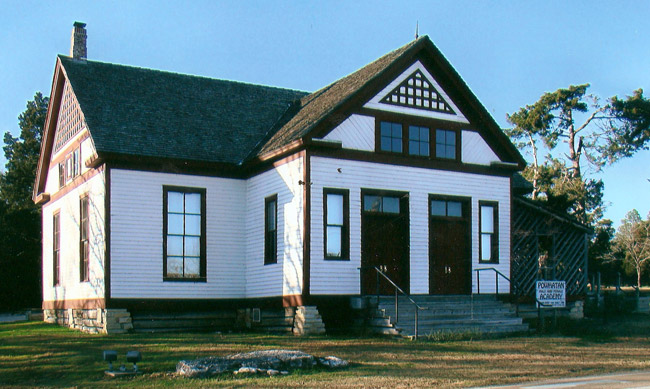
This is the schoolhouse Jo attended. It still stands. 


Mary Josephine Webster was born August 6, 1894 in Powhatan, Arkansas to

James Calvin Webster and Sarah Lamb. Her childhood school is still there to this day

because Powhatan, Arkansas is now a state park to preserve the historical buildings.


Jo grew up with three sisters and two brothers.  Her father was a civil war veteran and

he passed away young, when Jo was only 14. Jo helped with the sheep for wool growing up.

I imagine Jo also spun it into thread for knitting. 


At 20 years old, Jo married Benjamin Grimes Christmas eve 1882 at her home then

moved to Walnut Ridge with her husband. See Benjamin Matthew Grimes’ entry for

more information on her life after marrying Benjamin.


Friday, December 18, 2020

Mary Belle Schmick

Harvey's mother on left, Harvey Hawkins, Birdie Snook, and Mary Belle Schmick

Dennis James and Mary Belle (Schmick) James 

Mary Belle Schmick was born in Tazewell County on January 4, 1879,  in Spring Lake Township, near Manitoo to Issac and Rhonda Schmick. Her father attempted to be a pioneer in Kansas, but it failed because of the great blizzard. 


November 1885-March 1886, a blizzard wiped out all of Kansas. It was so severe that at their Montgomery County, Kansas home, her parents had to burn their possessions to keep warm- tables, chairs, beds, and so on.  When the blizzard stopped, the snow didn’t melt until May and the grass didn’t come back until July. That July, her family returned to the homestead in Spring Lake, Illinois and there, her father died when she was 12 years old.  


Mary Belle’s first husband is from nearby McLean, Illinois. For some reason, Mary and Birdie Snook travelled from Illinois to Butler County, Missouri to get married on November 24, 1897, then the newlyweds returned to Spring Lake, Tazewell County, Illinois where their first child arrived August 20, 1898. Her husband worked as a clammer on the nearby rivers. Two years later, Gladys Snook was born , then a son Leo in 1901, then Orin in 1904 and Iona Birdie in 1906. 

Mary divorced Birdie and took the children with her to Poplar Bluff, Missouri and married George Nichols. Shortly after her marriage, her eight year old son Leo died and she buried her son in Butler County, Missouri. She divorced George Nichols shortly after Leo’s death, but a cousin said George died that same year from pneumonia also. I haven’t been able to verify this. 


In 1911, she married again to Harvey Hawkins, but ten years later, he kicked her out and married her youngest daughter Birdie when she just turned 14. Mary Belle moved to Arkansas after this happened. 


December 1926, Mary Belle married Dennis James at 47 years old. When her daughter Birdie died at just 18, she raised her grandchildren.  The children of her ex-husband and her own daughter.  Her grandchildren referred to them fondly as grandpa James and grandma James, so they must have not kept in touch with their biological grandfather Birdie Snook. 


Mary Belle Smick died as Mary Belle James on February 1, 1951.


Wednesday, December 16, 2020

Birdie Snook, the clammer on Mississippi.

 Birdie Snook was born Charles Quimby Burdette Snook to Charles and Mary Snook in McLean, Illinois on November 21, 1879. His father was the manager of the McLean train depot. His father died of a seizure when Birdie was six years old.  


Birdie went to various places on the Mississippi river starting in 1865 at age 16 and got into the clamming industry. Birdie had a rake with many tines and he plunged it down into the muddy water, dragging it along the bottom making the mussels and clams clamp down on the tines. Then he would draw the rake out of the water and pull the mussels and clams off the tines.


Clams and mussels were used for both meat and buttons for the button industry 1890-1910. Birdie would use a rake from the boat, plunging it into the muddy water and dragging it along the bottom so that the mussels and clams would clamp down onto the tines and he’d pull them off and repeat the process. 


When he was 18, Birdie appears in Butler County, Missouri getting married to Mary Belle Schmick and he brings his bride back to along the Mississippi river and resumes his job on the Mississippi River. My great grandmother Ethel is his firstborn. She was born August 20, 1898 when Birdie was 18 years old. Gladys Vishti Snook arrived in February 1900, then Leo in 1901, then Orin Charles Snook in 1904, then his daughter Birdie Snook in 1906. He divorced Mary Belle and remarried to Gertrude Thompkins. With her, Birdie had Virginia, Goldie, Burdette, Donna Mae and Gertrude. 


In 1921, clamming was now banned due to over-harvesting for mother of pearl buttons and he changed to being a commercial fisherman. He would catch things like channel catfish and bass. He died a few years later at the young age of 46 on January 14, 1926. I was unable to find his death certificate.

Birdie Snook as a child. 
Birdie Snook showing off his catches from the Mississippi in 1922. 
Birdie Snook when he married Gertrude. 
An example of the clamming boats he used on the Mississippi

A photo from the Iowa history archives showing a clammer hanging up mussels and clams to dry out so they could be sold to button factories. 


Susan Beales / Susan Beal

 Susan Beales, daughter of James and Nancy Beales/Beal/Beale was born in Bellair, Illinois in June 1862, the eldest of her siblings. Her mother Nancy died when Susan was 11 years old, and shortly thereafter, she went to find work in the nearby big city, Vandalia, Illinois.  There, she married her first husband, Mr. Johnson. He died soon after marriage, leaving Susan a very young widow. 


Susan was hired by J.W. Morehead as a cook at his hotel and it appears in many newspapers across the county advertised as a cozy hotel with delicious foods. She worked there from 1876 to 1881. I wonder if this is how she met Francis? Maybe he traveled to Vandalia, stayed in the hotel, and dined there, meeting Susan. 


Anyways, Susan’s father died in 1881, which we then find Susan getting married to Francis Marion Hornbeck. On their marriage certificate, it had the full names of both sets of parents. Susan bore him 4 children and she died when her youngest son was 5 years old on August 21, 1897. Her grave is missing, and that's another thing I am trying to find more information about.


I wish I could have found out more information on the hotel Vandalia she worked at. If you’re a history buff and have knowledge about this hotel, I would love to find out more about what kind of dishes the hotel served.